Financial Flu

It’s that time of year again in the southern hemisphere. The days are shorter, the nights are long and cold; dressing gowns and woolly jumpers have replaced sunblock and shorts. Another thing that is common in winter is the flu, so this article published on MoneyWeb seemed particularly apt for the season.

According to the article, a recent financial wellness survey carried out by Sanlam highlighted that 73% of middle-class South Africans experience financial stress.

This was described by the survey “as emotions associated with the difficulty an individual or household may have in meeting financial commitments due to a shortage and/or misuse of money.”

A quarter of those experiencing these worries expressed that they were stressed continually about their finances, and cited the most significant causes as: short-term debt, such as car and credit card payments; extended family obligations; not being able to save; not having enough for any emergencies; and school or university fees.

Viresh Maharaj, CEO of Sanlam Employees Benefits: Client Solutions, rightfully pointed out that this would be considered an epidemic if we were referring to a disease. “If this was the flu, then 70% of South Africa said they’ve got the flu at the same time, it would be headline news.”

In South Africa, the middle class is the backbone of the economy and pays a substantial part of the country’s tax. A lot depends on this sector, so these levels of stress are concerning.

Conspicuous consumerism, as well as demanding economic conditions, have been labelled as the key culprits of this financial stress. The advertising industry has created “a culture of consumption on steroids” that needs to be addressed. Maharaj also ascertains that “while the National Credit Act includes various checks and balances… it doesn’t address the fact that being able to pay for something is not the same as being able to afford something.”

The findings from the survey suggest that many middle-class South Africans may struggle to meet short-term goals, which may have a knock-on effect of limiting their capacities to ensure they have enough funds to properly provide for their retirement. Many individuals seem to be focusing on immediate financial concerns, and socio-economic constraints mean that the retirement funding issue isn’t being resolved. In the survey, over 60% of respondents “said they would work beyond retirement age, while 73% said they would reduce their current standard of living.”

However, you don’t have to be part of this statistic. Now’s the season to get your flu jabs before the holidays begin and arrange a meeting to discuss how to structure your financial portfolio so that you don’t have any unnecessary financial stress – now or in the future.

Protect yourself from any kind of flu this winter by seeking advice and taking the appropriate measures to ensure your long-term financial wellbeing.
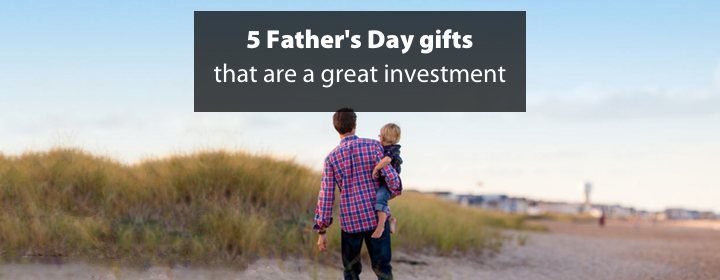

5 Father’s Day gifts that are a great investment

Whatever you do, don’t forget Father’s Day, which is coming up in South Africa on Sunday, 18th June. After all that our dads have done for us, the least we can do is show them how much we care. And if your father is like many other fathers – in that he loves to save a bit of cash – here are five gifts that will give him high returns, no matter how the markets are performing.

1. Sous vide cooker
Is your dad a bit of an amateur chef at heart? Then buy him a sous vide cooker and give him the chance to cut costs by cooking for everyone more frequently. This method basically involves cooking food for a long time in a heated water bath, making it an incredibly easy technique with reliable results. The steaks will rival any in a restaurant, meaning that he’ll save money on dining out and no food will ever be wasted on his watch.

SHOP FOR IT ONLINE HERE:

2. Solar-powered anything
From a solar-powered Bluetooth speaker, to a solar backpack, you can’t go wrong with these environmentally friendly and cost-efficient gadgets. If your dad likes anything to do with the great outdoors, a solar-powered backpack will keep a USB device charged so that he can stay connected whether he’s golfing, hiking, fishing or camping. And if he’s a world-class entertainer, then a Bluetooth speaker will have the party pumping at his next braai for up to 10 hours – so he can raise the roof without raising his electricity bill.

3. Craft Beer Monthly Club subscription
Give your Dad the gift that just keeps on giving. “A curated collection of the latest craft beers and old-time favourites” will be delivered to his door by YuppieChef each month and will save him lots of Rand on beer supplies throughout the year. He can also become a bit of an aficionado thanks to the online tasting notes that come with each case.

SHOP FOR IT ONLINE HERE:

4. Gym membership
To balance out his beer or boerie intake, make sure he keeps fit and agile by buying him a year’s gym membership. Not only will you be investing in your dad’s good health – and could potentially save him on medical expenses – but the gym is also a great place for him to socialise, which will keep his mind as well as his body active. You could even throw in a few sessions with a personal trainer to get him into the swing of things.

5. WiFi-enabled smart switch
Is your Dad always getting grumpy at lights being left on? Then give him the power to turn a switch off from anywhere, simply by using his smartphone. Some switches will even allow him to monitor the energy used.

In the spirit of thinking about the bigger picture in our current financial climate, hopefully one of these presents will be the perfect long-term investment for him.

How to Create Wealth in an Uncertain World

Creating wealth is a long-term process that requires patience, resilience and a strong strategy that can weather the global investment storm that has been raging in recent times. As you embark, or continue, upon your journey to financial independence, it is important to wholly understand the investment landscape, or have an advisor you trust, in order to successfully navigate the ups and downs of a stormy market and exploit the nuances of profit-yielding opportunities.

What exactly, has created the stormy conditions?
According to a recent article entitled Navigating Uncertain Waters, slower demand from China last year resulted in declining commodities prices and low levels of economic growth in many emerging market economies. Combined with the political developments in the UK and the US, which caught the world by surprise and created a great deal of uncertainty, 2016 saw poor investment returns that have left a wake of general unease.

Further pressure from the weak commodity markets, slow economic growth, global political uncertainty and two credit rating downgrades in South Africa have resulted in the local equity and property markets delivering below average returns.

Against the recent backdrop, most South African investors have at best been treading water or have seen their wealth decline in real terms, as portfolios have largely been unable to beat inflation.

According to the article; “the average balanced collective investment scheme, or unit trust, achieved a return of between 1.5% and 2.5% while the average offshore balanced portfolio delivered a return of around -7.5% for the year.”

Goodbye to the Past
It is important to put things into perspective and appreciate that investment markets often go through weaker growth periods of consolidation (this is technically known as a process of reversion to the mean). The below average returns achieved in 2016 followed the above average growth that started after the financial crisis in 2009, and weaker periods in investment markets create a more realistic long-term average and allow for better investment returns to be achieved in years to come.

Given the current political climate, 2017 could well be another year of consolidation. However, if you’re looking to achieve a long-term investment goal, it is important to not be swayed by short-term ideals or emotions, as you have a higher probability of growing your wealth if you stick to your investment strategy.

The Five Steps to Long-term Investment Success and Financial Independence

  1. Determine your investment objective by specifying a realistic goal you wish to achieve.
  2. Set your time horizon, which is the number of years you have to achieve your goal.
  3. Decide on an appropriate investment strategy by selecting a combination of asset classes in which to invest – bonds, property, cash, offshore assets, and equities.
  4. Select the most appropriate investment platforms, products and asset managers through which your chosen investments can be made.
  5. Monitor and review all of the above on an ongoing basis.

While a great deal of uncertainty remains for South African investors, it is important to understand that uncertainty, and even volatility, in investment markets do not only represent risk, they also represent opportunities.

The key is to remain informed and seek to improve your knowledge about your investments, then keep the various elements of your investment plan aligned to navigate uncertain waters and continue on your journey to wealth creation.

Keep Calm and Carry On

When it comes to investments, it’s important to stay focused on the bigger picture – even though the effect of recent political events in South Africa may have you itching to move your investments out of the market and into cash.

The instinct to do this arises from the fact that cash investments are readily available for use and are free of most investment risk. The low risk of a bank failing is essentially the only concern as they are investments on short-term, variable-rate deposit with reputable banks.

However, in an article published at the start of April 2017 in Personal Finance, Leigh Kohler, the head of research at Glacier by Sanlam, explained that it’s important at times like these to remember that even though a cash investment may seem like a comparably safe one, the returns don’t often beat inflation. Only once between 2001 and 2016 did cash investments outperform local equities and bonds.

Furthermore, if you had been invested only in South African equities over this period, you would have received an average return of 17.12%, compared to just 7.96% if you had only invested in local cash investments.

You are also taking two market-timing risks if you wish to move your investments into cash then back again once things have calmed down, and research shows that getting the timing wrong can be a huge blow to your portfolio.

No one knows exactly what the future holds for the markets, but since former finance minister Nhlanhla Nene was fired in 2015, there has been heightened volatility and you can be sure to count on more. Riding this volatility and being invested for the long-term in listed property and equity is how Kohler believes you will earn inflation-beating returns.

What should you do in lieu of making an emotional decision?

  • Invest in a combination of asset classes in line with your needs, time horizon, and risk tolerance;
  • Invest in a suitable multi-asset fund;
  • Ensure you have sufficient exposure to offshore assets;
  • Understand and believe in your long-term investment strategy, then stick to it.

If you would like to chat in person about this, don’t hesitate to arrange a meeting to review your portfolio so that we can revise and reinforce the stability, flexibility and durability of your financial plan.

Keep your Retirement Options Open

It’s never too early to start planning for your retirement, and help is at hand if saving for the future ever feels confusing or overwhelming. The key is to think like a wilderness explorer and always be prepared!

Be open to what could happen in your autumn years. For example, if you live to the impressive age of 95, you may very well want to buy two new cars and move home at least once during your retirement, so you’ll need to plan accordingly to cater for potential scenarios.

As people are living longer, so will they require more capital after retirement, it’s a good idea to start planning as early as possible to secure your future. And a diversified portfolio is the way forward in order to ensure that you have enough to enjoy a long and happy retirement after years of hard work.

Don’t think of your savings as a one-trick pony, as sadly it isn’t enough to rely on just your pension or provident fund and retirement annuities. Life is often what happens when you’re making other plans so you don’t want to put all of your eggs in one basket. If anything ever goes pear-shaped, you’re going to need liquidity, so it’s important to ensure that you’ve got different options to fall back on.

To start with, both you and your partner should open a tax free savings account (or similar vehicle – we can chat about this in person) as soon as you can. This might also be the time for you to start considering building a property portfolio. Bear in mind that owning many small properties in one location that you know well and that you can look after yourself is arguably more profitable than having just one big property.

These are just two ideas that you can consider towards planning for your retirement. Simply arrange a meeting to chat about all your options and design a retirement portfolio that will cover your bases.

Rich for distress

In the aftermath of South Africa’s downgrade to junk status by two major ratings agencies, it is feared that the country will begin a self-reinforcing downward spiral. Until the end of 2016, Azar Jammine, the director and chief economist of Econometrix, felt that the nation was experiencing a “slow erosion, not a huge slump.”

However, in an article published in October last year by the Mail & Guardian, Stanlib’s chief economist, Kevin Lings, warned that the country would be vulnerable if “the economy continues to deteriorate and confidence dissipates.

He also emphasised that circumstances were ripe for businesses to need to do some real cost cutting in the form of retrenchments.

The widespread retrenchments that many feared would take place over the last couple of years never really happened. Although the trend has been towards the downside, the expected acceleration in retrenchments in the manufacturing, mining and construction sectors didn’t happen last year.

This is believed by Lings to be because the companies that made huge job cuts during the 2008-2009 financial crisis didn’t really add those jobs back. He explains that many companies in the formal sector “have been incredibly reticent in adding more jobs. So now, when you get a downturn, businesses don’t have the excesses they had in the past. There’s little to trim.

So although the last decade has witnessed “the beginning of a new normal” in which there have been some preliminary indicators of financial distress, Lings explained at the end of 2016 that “when we look at South Africa, what we see so far is that the environment is rich for distress but it is yet to show up.”

Statistics show that there most certainly was a decline in the sale of household goods and vehicles, but the “tightening of regulations and the implementation of affordability testing and debt counselling are thought to have had a positive effect” on deterring unsecured lending, which is a key indicator of when people are under stress.

Now, however, as a result of the combined factors of the drought, the corrupt political situation, and the downgraded economy, South Africans wait with baited breath for what will happen next. The Rand, at around 12.90 to the dollar towards the end of April 2017, remains weak.

It is important at a time like this to understand the implications of recent events. Don’t be distressed, refrain from making impulsive decisions – let’s arrange a chat to find out what the future may hold for your personal investment portfolio.

How to Reduce Estate Costs

A death is often a traumatic enough event, without the added burden of dealing with estate matters. Unfortunately, many people underestimate the costs related to death, especially the smaller fees that quickly add up. Consequently, loved ones sometimes find themselves in situations where they have to sell valuable assets in order to settle the outstanding debts of the deceased.

In an article recently published on Moneyweb, the chairperson of FISA, Ronel Williams, offers advice on how you can ensure that everything goes as smoothly as possible in the event of your passing. This article breaks down the costs incurred after death, and takes a brief look at how to reduce them.

She explains that “the costs involved in an estate can broadly be classified as administration costs and claims against the estate… Claims against the estate are those the deceased was liable for at the time of death, the notable exception being tax.”

The most significant administration costs are generally the executor’s and conveyancing fees. Fortunately, with a bit of planning, you can reduce some of the costs involved by negotiating the executor’s fee with your appointed executor when you draft your will. You should then stipulate this fee in the will or ask the executor to confirm the agreed fee in writing.

Williams elaborates that, “depending on who the executor is and what the composition of your estate is, you can probably negotiate up to a 50% discount.”

However, the discount can vary depending on factors such as whether a surviving spouse is the sole heir or whether you have additional business and offshore interests. She also highlights that “costs of security can also be avoided completely by exempting the nominated executor from lodging the bond of security in the will.”

As Williams is quick to emphasise, “death can be an expensive and cumbersome affair, particularly if estate planning was neglected.”

It is, therefore, important to do proper planning to ensure you have taken the most effective measures to reduce the costs. It is also important to take out life and/or bond insurance so that sufficient cash is available for your heirs to settle any claims against the estate and to pay for all the smaller administration costs that have little scope for negotiation.

The Value of Good Advice

Positive steps to regulate and improve the conduct and professionalism of the financial planning industry have been made over the past months and are now coming to a point where it will impact our clients. These steps have been called the Retail Distribution Review (RDR).

On the surface, RDR is looking to turn the commission-based world of financial advice on its head and render it a fee-charging service – just like any other professional service, such as that offered by an architect or a lawyer. Deeper down, it will create a level of accountability that thrives in an environment of trust and ongoing value – which is the space that a financial planner should always fill.

In an article published on Maya on Money, the General Manager of Broker Distribution at Sanlam Personal Finance, Jacques Coetzer, clarifies the situation succinctly. He explains that, as a client, “you will start to pay a fee specifically for advice services, as well as a fee for advice related to the products you eventually purchase.”

With the new systems that will be coming into place, the key is to be prepared in advance. So don’t be scared to ask questions, discuss this and find out what it will mean for you. This new system provides more options – in terms of the value you receive and how you receive it – and you will most likely be in a position to negotiate a fee structure for advice and planning services.

RDR proposes three main payment options:

  1. Retainer fee
    This can be paid on a monthly or quarterly basis and will give you the right to a review or certain services throughout the year.
  2. Advice payment
    You will only pay for advice when given and, if you decide to act on it, this can then potentially be offset against a purchase fee.
  3. Negotiated fee
    This can be paid as a once-off transaction or deduction from an investment.

Many people question the need to pay for the advice or services of a financial planner when they could invest independently. However, given the smorgasbord of investment options on the market, this could prove to be an overwhelming activity and result in costly mistakes that could easily be avoided.

Coetzer explains that knowledge and experience can’t be obtained from a website, and “qualified and accredited brokers offer a significant service to empower South Africans to take charge of their financial destiny.”

A UK study confirms his beliefs in its findings that “clients who received appropriate financial advice typically saved nearly double the amount for their retirement than those who didn’t seek advice.”

Secure your financial future by initiating discussions soon to learn about how the new regulations will affect you.

Living Annuities for Retirement Planning

One sneaky fact about retirement, that many of us often overlook, is that it arrives faster than we expect! Essentially, we are never too young to think about our retirement investments inside of a healthy financial portfolio.

As you read this blog, please also bear in mind that each person’s retirement goals are unique and may have different investment vehicles inside their retirement investment plan. This post refers specifically to living annuities – and can be rather technical. If you have specific questions regarding your portfolio, then let’s set up a meeting to address your personal situation.

South African pensioners have about ZAR350 billion invested in living annuities from which they can draw a pension that is equal to between 2.5 and 17.5 percent of the annual investment value.

Most people appreciate that living annuities come with many risks – from investment markets delivering poor returns, to outliving their capital. Nonetheless, 90 percent of people who belong to retirement funds buy living annuities instead of guaranteed annuities, and are willing to take these risks in the hope of greater returns for themselves and their heirs. However, the Financial Services Board (FSB) is concerned that living annuitants may not fully understand one of the biggest risks of the product – that is the risk of depleting their money prematurely.

In an article published on Personal Finance, Marc Thomas, the manager of client outcomes and product research at Bridge Asset Management, explains the situation simply. “Unit trust funds that have the best returns in terms of the value of the units could still do poorly in terms of providing an income that buys back the units lost when drawing an income.”

As the units are depleted, the capital value of the annuity declines. However, to compound this decline, the yield earned on your investment is also reduced because you have fewer units on which to earn an income.

Sadly, as a result of not fully appreciating the risk involved, many pensioners are forced to dramatically reduce their pensions at some stage of their retirement because they have simply sold too many units. If they see healthy returns, they surrender to a false sense of security and believe they can continue drawing a high income, or even increase it further.

It is often the case that the income earned by the portfolio only covers around a third of the income drawn. Thomas warns that “if you are selling more units than you are buying with the dividends and interest your investments earn, you will eventually run out of money… But if, over time, the units you withdraw equal the units you can buy with the income earned from your investments, you will not run out of money.”

So how can you prevent this from happening to you?

An obvious solution would be to ensure that you have a portfolio that earns an income that matches the amount you require – or at least a very high proportion of it.

Additionally, when reading the statements that you are sent, which include information about the units sold over the period, it is important to focus on the unit balance. Thomas emphasises that “living annuities and annual income withdrawal decisions should not be managed solely on capital values, which can be highly volatile in the short term… Instead, unit balances and the income produced by the investments should be monitored constantly.”

In recent times, providers have also launched products with more guarantees, as well as a living annuity with an underlying investment in a guaranteed annuity that provides an income for life. It is, therefore, important to find out what options are available to you and to assess the risks so that you can properly prepare for your retirement – without surprise cutbacks.

The important thing is to not be fooled into complacency while drawing an income. Even if a fund produces healthy double-digit annual returns over a decade, pensioners have been warned to not draw more than 5% per year.

Junk Status – A Fallen Angel

The South African landscape of junk status is looking rocky and, in a time like this, it is important to stay informed about what is happening and how it could affect you.

Political risks from South Africa’s cabinet reshuffle on the last day of March 2017 have been labelled accountable for Standard & Poor’s (S&P) downgrade of the country’s international credit rating to junk status and the subsequent currency crash.

In spite of Jacob Zuma’s attempts to encourage his cabinet to quell the fears of international investors, his firing of some of his critics and the finance minister, Pravin Gordhan, who was seen as a stalwart supporter of anti-corruption, has created a whirlwind of chaos. After regaining strength and reaching a 20-month high, the South African Rand recently plunged by 13% against the US Dollar, and analysts predict that it will continue to weaken.

Malusi Gigabathe, the newly appointed finance minister, has assured us that the ratings cut will ensure greater government focus on transforming the economy and addressing the racial inequality in working life.

WHAT DOES THIS MEAN?
Countries that are downgraded to junk status are often referred to as ‘fallen angels’. Many investment funds – both local and international – are not allowed to invest pensions or savings in countries that have this status.

Christie Viljoen‚ senior economist at KPMG South Africa‚ explained to TimesLive that, as a result, “investment funds will sell their debt as they are mandated to place their money in investment-grade jurisdictions only.”

Reuters has even reported that as much as US$10 billion dollars could leave South Africa. The Rand will then continue to plummet as more and more people sell Rands and buy other currencies instead.

However, the slightly reassuring news for the time being is that the Global Bond Index refers to the country’s domestic credit rating. As S&P didn’t downgrade South Africa’s domestic rating to junk status as well, it is fortunately unlikely that foreign investors will be forced to withdraw as stands.

Also, many foreign investment mandates do still allow for investment in a country so long as it remains on an investment grade rating of at least one credit rating agency.

Even though that may be the case, many argue that its junk status will still make South Africa unattractive to foreign investors, which would result in less job opportunities.

HIGHER FUEL PRICES
It could also become a more expensive place to live, as oil is bought in US dollars so this price rises when the Rand weakens as a knock-on effect of the instability. This means that South Africans are likely to see a rise in petrol prices and thus transport costs, which will affect the cost of everything that is transported in trucks – so basically, anything you buy at the shop.

HIGHER INTEREST RATES
The junk status will also push up South Africa’s borrowing costs and could, therefore, drive increases in interest rates. This means that the people who will be most negatively affected by the downgrading are those who have debt – from short-term loans, to long-term car and home loan obligations – as their debt will increase and be harder to pay.

The Mail & Guardian explained the situation clearly on a Twitter thread:

“Junk status effectively means a country becomes a defaulting risk because it can’t pay back what it has borrowed … The two biggest consequences of a credit junk-grading are political and financial. When gov can’t borrow from capital markets, it has to borrow from other governments (look East?) or institutions like the IMF. This is the kicker because this leads to a loss in sovereignty. Typically there are strings attached… The structural adjustments imposed by the IMF & World Bank can affect national policy. Everyone is affected but some more so than others. The poor will bear the brunt of the downgrade, as will young people.”

S&P also expects the interest costs on government debt to rise from 3.2% of GDP to 4.25%. If this happens, there could end up being less money for other expenditures such as health, infrastructure and education.

Times Live clarifies that “junk status ultimately means the government will pay much more to borrow money. The government then has two choices: to cut spending or increase taxes to cover the extra costs spent on debt.”

LIGHT AT THE END OF THE TUNNEL
However, even with the threat of an increase in tax and interest rates, and a generally higher cost of living, it may not be all doom and gloom for investors. Nafez Zouk, senior economist at Oxford Economics explained to Reuters that “fallen angels often draw in a different investor base seeking higher yields and more speculative investments.”

Certain emerging market fund managers are waiting for opportunities such as the one South Africa could present and, although its trajectory may not be looking positive for a few years thanks to the political situation, Jan Dehn at Ashmore Investment Management suggested that “if prices fall enough that the credit has been oversold relative to how risky it is, then clearly that’s a buying opportunity.”

In a time of chaos, it is important to keep your wits about you and not simply make emotional decisions, especially with regards to an investment portfolio. Review your financial situation rationally to prepare for your future, protect your investments and make your money work for you.