Retirement 101

Creating your long-term saving goals (this is retirement for many people) is not something that you can simply decide on the spot – and often, these goals may change over time. Before you even get into some of the technicalities of long-term saving strategies, as we will cover in this blog, you need to know why you’re saving – and what you’re saving for. When you know the why, the how is much easier.

This should become an ongoing conversation with your financial advisor – one blog simply cannot cover it all – but hopefully it will help you on your journey!

Given the advances already made in the fields of technology and medicine, we are living longer than previous generations, which means that a balanced and robust portfolio will make provision for a long and happy retirement after you hang up your work boots.

Delaying saving for retirement is not uncommon, as other life costs can easily seem more important when you are young. Even those who are forced to save — as a result of a compulsory deductions at work — still might not have enough when it comes to retirement age.

It’s not only how much money we save that counts, but also when we start saving. Your retirement should be a time when you finally get to reap the rewards of decades of hard work. However, if you wish to enjoy these golden years in comfort, it’s best to start saving when you’re young, as the earlier you start, the less you need to put away each month.

Many people only start saving at the age of 28, rather than when they first start work. And there are even more who wait until their thirties, or later still. The problem is that if you start later on in life, you’re not just faced with trying to catch up on the amount that you could have been putting aside before, but you also need to make up for the compounded returns that you’ve missed out on. The earlier you start saving, the more you can benefit from the market contributing to your retirement through the power of compound interest.

For example, if you start saving ZAR5,000 a month at 25 years old, at an
annual average of 6% return, you’ll have more than ZAR7-million by the time you hit 60.

However, if you start saving the same amount a decade later, you will only have ZAR3.46 million by the age of 60. You’ll, therefore, need to increase your savings to ZAR10,000 a month to reach ZAR6.9 million in your 25-year investment horizon.

How much will you need

The first step towards saving for your retirement is to figure out how much you will likely need. Most retirement experts in South Africa advise that you’ll probably need to replace about 75% of your current income to retire comfortably, assuming you don’t have a home loan or any other large debt by that age. Peter Doyle, the former president of the Actuarial Society of South Africa, explains that “12 times your annual salary is likely to buy you a financially comfortable retirement.”

However, in recent experience we are finding that those wanting to retire need about 90% replacement ratio, especially as medical expenses are likely to rise as you get older.

To achieve a comfortable retirement, it is widely recommended to save at least 15% of your gross income over a 40-year career if you start saving at the age of 25. However, a late start or early retirement would obviously require a much higher savings rate.

How to save

When it comes to saving for retirement, you need inflation-beating investments and as much time as possible to benefit from the compound interest.

There are various retirement plans that you can choose from. The most tax efficient way of saving in South Africa is arguably to invest the maximum percentage of your salary possible in your company’s pension scheme and/or a retirement annuity (RA).

The good news is that contributions to a retirement annuity, which you can invest in through a financial services provider; and/or pension or provident funds, which are provided by employers, are tax deductible up to a certain amount (you can contribute up to 27.5% of your gross remuneration — up to a maximum of ZAR350,000 per year — to a pension fund or RA). And, as you can save pre-tax with these vehicles, you can benefit from the compounded growth on a larger amount.

A major benefit of an RA is that all growth is completely tax-free, but it is important to review all the costs, as life-linked retirement annuities can be expensive. If you do wish to invest in an RA, it’s advisable to select one that has no penalties or obligation for monthly contributions. The best ones don’t have any upfront fees and operate on a pay-as-you-go basis.

More flexible retirement products are usually unit trust-based, as these allow you to decide when and how much you want to contribute. Generally speaking, a balanced unit trust offers a good savings option for retirement, as it should provide adequate equity exposure for long-term growth, as well as more stable asset classes that can mitigate the investment risk.

You can also supplement your savings by investing in a tax free savings account (TFSA), an investment property, or trading in shares. A tax-free investment could be a suitable additional investment, as it still offers tax benefits without some of the restrictions that can come with a retirement annuity. However, it does have its own restrictions — a TFSA currently only allows for tax-free savings of ZAR33,000 a year, and a lifetime limit of ZAR500,000.

How to play catch-up

It’s worth aiming to save at least ZAR15 of every pre-tax ZAR100 if you have a 40-year timeline. However, if you want to retire before the age of 65, or put off saving until your thirties or later, then you will need to increase that saving rate. If you start saving at age 30, you will likely need to save 20% of your gross income, while starting at 40 years old will mean you will need to save 42%.

If you’ve left it late or realise you need more savings to retire comfortably, the easiest way to solve this problem is to save more (saving an extra ZAR4,000 a month on a ZAR40,000 salary will make a big difference). If you are willing to cut back on expenses, find a way to generate extra income, inject part of your annual increase or bonus, or pay off your debts as quickly as possible, then invest the freed up money. Essentially if you clean up your budget, and get into the habit of saving regularly, you can work towards a healthier retirement fund.

You may also need to be more aggressive when it comes to investing. A widely accepted rule of thumb is to subtract your current age from 100 and invest that percentage of your portfolio in equities, or many people now follow the ‘110 rule’ as we are living longer. So, if you’re 30 years old, you’d invest 80%, and you’d decrease this to 70% at age 40 to also decrease the risk in your portfolio as you get older. However, if you don’t have enough saved for whatever reason, you may well wish to increase the equity portion of your portfolio. Don’t hesitate to arrange a meeting to discuss this so you can make an informed decision and not take unnecessary risk.

Another thing to bear in mind is to preserve your benefits rather than take the cash if you are offered withdrawal benefits or change jobs. Furthermore, although you can also access your savings in preservation funds and retirement annuities at age 55, it’s best to again keep your money invested. Don’t be tempted to use your money for anything that is not essential, as you should be adding to your savings at this stage, rather than eroding them.

Saving for retirement can seem a complex task, but it doesn’t have to be if you do a bit of research and arrange a meeting to discuss the different retirement plan options available. Building a diversified retirement portfolio will depend on your assets, your risk profile, your age and your financial goals, but you’re on the right track once you have picked a strategy that you trust, and have established a suitable retirement portfolio. This should then be reviewed at least once a year — even quarterly — so you can track whether you are saving enough and make adjustments if need be. This can be done at the same time as your tax planning so you can ensure you are taking full advantage of all the tax breaks each year.

(blog ideas were added to from fin24.com)
Financial lessons from Rich Dad, Poor Dad

In his bestselling book, Rich Dad, Poor Dad, the author, Robert Kiyosaki, explains the fundamental differences in the way his two fathers thought about money — his real father who was ‘poor’ and the father of his best friend who was ‘rich’, despite both earning a good salary. From studying their journeys, he realised that your wealth can depend more on your actions than the money you earn. He surmised that it is, therefore, important to first change your attitude about money because your thoughts lead to your actions.

Here are 6 fundamental financial lessons from the book that can help you to build wealth and retire in comfort.

1. Manage your money

Many people are able to make money, but not everyone learns how to manage it properly. Financial intelligence starts with learning the difference between assets and liabilities. By enhancing your savings and tracking your expenses, you can become aware of your spending patterns and ensure that you have more money coming in than going out, which is what will make you richer.

Many people make the mistake of thinking that earning more money will solve their financial problems, but this could only serve to compound them if your outgoings increase exponentially too.

2. Make your money work for you

A main point that Kiyosaki makes is that the lower and middle classes work for their money, whereas the wealthy have money work for them.

Learn how money works, then work out how to make it, independent of a paycheck. Look into how you can generate more income by investing your money wisely. And don’t give the financial power to your employer, but rather keep the power by taking control of your money and making it work for you.

3. Be brave and don’t be scared to fail

Most people never win because they’re afraid of losing or failing. However, we often learn and improve by making mistakes, and failure is often part of the process of becoming successful.

You don’t have to be ridiculously intelligent to have financial success. While Kiyosaki’s father had multiple qualifications, his best friend didn’t have a proper education. A degree cum laude won’t necessarily make you wealthy if you don’t have guts and an understanding of how money works too. Generating wealth sometimes involves taking risks and dealing with a level of uncertainty. The trick is to be clever about when and how to take risks, by being savvy and learning from your experiences to assess a situation, rather than dive in blindly. The path to wealth often requires you to leverage money to mitigate your risk and maximise your profit.

4. Become financially intelligent and literate

The biggest cause of financial trouble is ignorance because this isn’t taught in many education systems or societies. Financial terms can be complex and daunting, but you can develop financial intelligence by reading about accounting and investing, and keeping informed about the markets. Kiyosaki believes that the cause of so much suffering is due to a lack of financial education. Courage plus technical knowledge will take you far.

5. Train your mind to look for opportunities

Look for creative solutions to any money problems. Maximise your options and work out what you can do to improve your financial position if opportunities aren’t falling from the sky. It is not so much a question of what happens to you, but the different financial solutions you can think of to turn things into opportunities.

6. Focus on assets over income

Concentrate on your net worth rather than your monthly salary. Start acquiring assets — such as stocks, bonds, or your own company — to earn you money, as opposed to liabilities — such as mortgages, loans, or credit cards — which cost you money. Build your asset column first, then buy any luxuries with the income generated from these.

According to Kiyosaki, you can measure your wealth by the number of days you can live off the income from your assets. And you can consider yourself financially independent if your monthly income from your assets exceeds your monthly expenses.

Making money is a question of mindset. Ensure you understand how it flows, and don’t hesitate to arrange a meeting if you need any help in applying these principles for financial freedom.

If you have the time – take a look at reading the book – Rich Dad, Poor Dad, by Robert Kiyosaki!

The urgency of an emergency fund

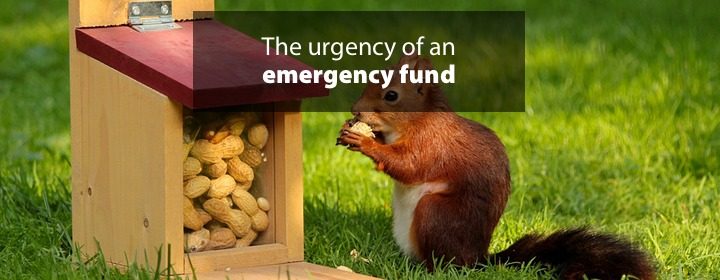
An emergency fund is a lump sum of money that is important to set aside to cover any financial surprises, such as car breakdowns, medical requirements, home repairs, vet bills, or sudden unemployment. These unexpected emergencies can be stressful, costly, and they often demand immediate payment.

You can financially manage these unanticipated disasters by ensuring you have an emergency fund to fall back on when the need arises.

Insurance can play a big part in financing emergencies, but it still does not replace the need for an emergency fund — your medical aid provider might not cover every expense; warranties come with a timeframe; and your home and car insurance policies may still require you to pay excesses.

You should, therefore, regard your emergency fund as an additional insurance policy that needs to be kept solely for emergencies, rather than dipped into for incidental expenses. Even if your income increases, it’s advisable to increase the amount you save for your emergency fund too.

In addition to the financial stability, there are other benefits to having an emergency reserve of money. Having a financial safety net can give you the confidence of knowing that you can tackle whatever life throws at you, which can help to keep stress levels at bay. An emergency fund can also prevent you from making bad financial decisions in times of crisis, such as borrowing a lot of money at a high interest rate, with fees and penalties. Having an emergency fund is arguably a necessity nowadays to save you on a rainy day from having no choice but to go into a lot of debt.

Studies have shown that many South Africans sadly don’t save enough for emergencies, and when faced with unexpected expenses, people often use credit that they can’t easily repay. Many people don’t save for emergencies because they don’t believe that something will happen to them, or they are not wholly aware of all the costs involved if the unforeseen does happen. Emergency savings are often not given priority as people tend to put their money towards short-term gratification or long-term goals. It is also understandably easier to save for positive events, such as a holiday or retirement, rather than prepare for the negative.

How much to save

While anything is definitely better than nothing, most financial experts recommend that you aim to grow an emergency cash reserve that would be large enough to cover all of your expenses for three to six months. The exact amount may depend on a few variables, so it’s advisable to arrange a meeting to discuss how your emergency fund could fit in with the rest of your priorities.

Saving for an emergency fund can require a bit of effort to achieve. The first step is to figure out how much you spend each month — accommodation, food and transport are likely to take up most of your budget — then multiply that number by three and you can set that amount as an initial three-month target.

How to save

There are many ways you can approach saving for this goal. For example, cutting back on the amount you spend on eating out can help to fund your savings plan. The key is to add to your emergency fund at regular intervals, and you can do this by dedicating a feasible amount from your paycheck and treating it like any other recurring bill that you need to pay each month. Saving a raise, bonus or tax refund, will also give a healthy boost to your emergency fund, as will downgrading your mobile phone service or trading in your car for a cheaper model.

If funds are a bit tight, you can start simply by emptying your pockets each day or tipping yourself whenever you eat at home, and stashing the change in a jar. If you manage to dedicate ZAR50 per day to your effort, you’ll have ZAR18,250 by the end of the year, which will add up to ZAR91,250 in five years!

This is when it helps to have a financial planner/coach helping you to create the saving behaviour change – and then keep to it!

Banks offer a range of savings accounts that may appeal to you. However, you should discuss whether there are any notice periods, possible penalties or minimum deposit requirements before going ahead.

Alternatively, you may wish to put your emergency savings into a money market unit trust fund or a high-interest savings account, as they are low-risk investments and accessible (although harder to dip into than a jar, your funds can be accessed in between 24 to 48 hours with no penalties), and you can also earn an interest rate on the money, which can be reinvested to keep up with inflation. A low-risk fund, however, does still carry the opportunity cost of putting your money in an investment that could be earning a higher return in a riskier investment.

Funds with a higher risk profile, such as a low-equity multi-asset fund or a bond fund, will generally earn a higher return than a money market fund. And you could select these funds for emergencies that are prone to above-inflation price increases, such as medical expenses. However, do bear in mind that if you choose this option, there is a risk of capital loss, as these funds are more volatile than money market funds. It is, therefore, advisable to invest for a longer term to reduce your chance of losses. You’ll find that each unit trust fund has a recommended investment period so that investors can maximise the benefit of that fund.

The amount of money required to fund a proper emergency fund is significant but necessary as we live in uncertain times with an uncertain economy. If you don’t have a rainy day fund already, start saving now and put aside whatever you can, even if it isn’t much. It will allow you to weather those rainy days without running up unnecessary debt. Be prepared — save towards an emergency and don’t hesitate to discuss how best to allocate your savings to appropriate investments.

Recent change to TFSAs

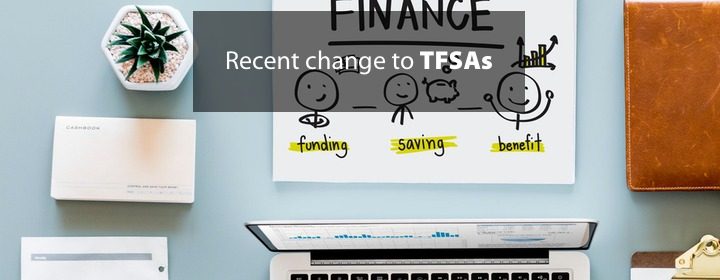
A National Treasury regulation that came into play on 1st March 2018 now provides South Africans with more flexibility when it comes to investing their money in a tax-free savings account (TFSA).

According to an article published on Business Tech, South Africans will be able to switch as much as they want of their money in a TFSA between financial service providers at no additional cost. They can do this up to a maximum of twice per year, and this will enable investors to adjust their tax-free investments to best suit any changes in their personal circumstances.

On 1st March 2015, the government first introduced tax-free savings accounts to encourage more South Africans to start saving, as there was found to be an exceptionally poor savings rate in the country.

Tax-free investments allow you to save without incurring any tax on the growth of your investment. This means that you don’t have to pay any tax on interest, capital gains tax (CGT), or dividends. Investors can invest up to ZAR30,000 each year (or ZAR2,500 per month) tax-free, until they reach their lifetime limit of ZAR500,000. However, do be sure to stay below the annual ZAR30,000 limit, otherwise you will incur tax penalties.

If you save the maximum annual amount consistently, investors can take advantage of the long-term benefits of compound interest and should, after just less than 17 years, have saved ZAR500,000 as a tax-free investment — in addition to compounded capital growth, interest and dividends.

Tax-free savings are for anyone with a taxable income, so it’s not worth putting a tax-free savings account in a child’s name if you wish to save for their education. Furthermore, be careful not to donate more than ZAR100,000 a year to children or grandchildren as a tax-free investment, or you will be liable to pay donations tax.

Make the most of a TFSA

To really reap the benefits of a tax-free savings account, it’s advisable to try to reach the ZAR500,000 limit as soon as possible, after which point you can watch your money grow with the power of compound interest for as long as possible. While saving, it’s also not worth making any withdrawals from your tax-free accounts, as you cannot inject the amount back once it’s been withdrawn if you have already reached the annual limit.

As a holder of a TFSA, consider the following factors before you choose an investment product (be that cash at a bank; or equity-based or unit trust-based investments).

• Consider your investment goal.
• Think carefully about your return requirements and risk profile.
• Decide who will be the beneficiary if you don’t intend to make any withdrawals and would rather leave the product as a legacy.
• Reflect on whether you wish to access your money when required or if you are happy to invest it for several years.

To best grow your portfolio, it’s worth considering all the tax-free benefits for which you are eligible. And, with the extra flexibility that this recent change to TFSAs provides, it could become (if it isn’t already) a wise addition to your wealth portfolio.

Don’t hesitate to arrange a meeting to discuss all considerations so that you can select the most suitable product and asset class for your personal risk profile and your wealth portfolio.

(information was sourced from businesstech.co.za and fin24.com)

Investing Offshore

July is National Savings Month in South Africa, which is an awareness campaign spearheaded by the South African Savings Institute (SASI). The objectives of the campaign are to promote discussion about saving, raise awareness about the benefits of financial planning, and motivate consumers to be proactive with regards to their savings.

The country’s weakened currency continues to affect the price of everyday items, such as fuel and basic goods, as well as more luxury expenditure, such as vehicles and international travel.

Given that the nation’s economy is in the doldrums, it is advisable for South Africans to hedge against currency depreciation, as much of our expenditure is priced in developed-market currencies. Consequently, many citizens are thinking about allocating some of their savings to international currencies, such as the British Pound or US Dollar.

Not only does this protect assets from the Rand’s wild volatility, but it also makes international travel more accessible and predictable.

You are allowed to move a maximum of ZAR1-million offshore each year without tax clearance from SARS, and a maximum of ZAR10-million with tax clearance. The ZAR1-million would, however, need to be registered with the Reserve Bank, so you would have to make the transaction through an authorised dealer (most South African banks are authorised dealers).

Here is a brief overview of your main options when it comes to offshore investments.

1. Invest in Rand-denominated investment options

A Rand-denominated investment is one in which your investment and currency exposure is foreign, but your money does not physically leave South Africa. Your investment is, therefore, made in Rands and paid out in Rands.
Contributions to a pension fund or retirement annuity can give you offshore exposure in your underlying investment choice, as pension fund regulations stipulate that up to a quarter of your capital can be invested offshore.

Additionally, most asset managers in South Africa offer offshore unit trust funds, which are priced in Rands, although your capital is invested offshore. Not only will this give you global diversification and foreign currency exposure, but you also won’t need tax clearance to invest in these funds, and the minimum lump sum requirements are much lower than for other offshore investment options. If you don’t have much money to invest, you can always save in this vehicle until you reach the minimum requirements for alternative options of moving your capital offshore.

If you have a stock broking account, you also have the option to redirect some of your capital to exchange traded funds (ETF) that invest offshore. Again, these allow you to invest in Rands and be paid out in Rands.

2. Physically take your money offshore

This ultimately involves going through the exchange control process, opening up an offshore bank account, and sending South African Rand abroad to be converted into your chosen currency. By actually moving your capital offshore, you will never be forced to repatriate or convert the investment back into Rands.

Once the money is offshore, you can do with it what you want (within legal boundaries). You could leave it in your bank account, or alternatively choose to invest it in unit trust funds or stocks.

Do be aware that any investments offshore will still form part of your estate, so you will be liable for estate duty in the jurisdiction in which you invest. However, certain South African investment providers offer offshore endowments that eliminate the need for an offshore executor or probate. You can nominate your beneficiaries and, after your death, your investment can either continue offshore or be paid out in the foreign currency to them. Both of these options can happen separately from the estate process. There are also some beneficial tax advantages of using an endowment structure, as CGT will be paid at a lower rate and calculated using the offshore currency.

However, this type of investment would require a five-year initial commitment period, as well as quite a large minimum lump sum (circa US$20,000+), and quite a lot of onerous paperwork. It has also been argued that it is not necessarily good for South Africans to take their money out of the country, as an emotionally-charged mass reaction, which involves physically moving assets out of South Africa, could do even more harm to the economy.

3. Open an offshore savings account

Some experts advise that South Africans should turn to offshore investing, which allows you to invest in international currencies via online banking, without actually taking your money out of South Africa.

A foreign currency investment account allows you to quickly and conveniently put some of your savings into a foreign currency, while offering the freedom and flexibility to easily access your money online and move it back into Rands when you so wish.

It is free to open and maintain an account, but transactions are ZAR75, which covers the exchange control checks that are required by the Reserve Bank.

For many investors around the world, investing offshore is often a means of achieving global diversification, accessing stronger economies and alternative industries, as well as being exposed to different interest rate and inflation regimes. However, South Africans have arguably more to consider when it comes to structuring their finances, such as the nation’s political and economic stability.

There are several factors to take into account when looking to invest offshore, and your decisions may depend on your main concerns. Whatever these may be, it is advisable to consider investing part of your portfolio offshore in some capacity, so don’t hesitate to arrange a meeting if you would like to discuss your options further.

Tax practitioner services

Filing a tax return can be confusing and time consuming, particularly if you have more than one source of income or are eligible for several deductions.
As frustrating as bureaucracy can sometimes be, expressing your irritation to anyone at SARS will probably not get you far. If any issues arise, it’s best to contact SARS professionally in writing so that your discussion is recorded and can be referenced.

If you wish to relieve yourself of the burden of filing a tax return, it’s worth seeking professional assistance. Although you will need to pay a fee for the services of a tax practitioner, it can actually work out cheaper than having an entire claim disallowed or being issued with a penalty for an incorrect claim. Furthermore, the fees are likely to be deductible against your taxable interest.

Registered tax practitioners

If you do decide to seek support in submitting your tax return, it’s important to only hire an accredited tax practitioner who is registered with SARS. They should also be registered with an approved controlling body, such as the South African Institute of Tax Professionals, as a controlling body ensures that members are up-to-date with their personal taxes, don’t have criminal records, and have the necessary qualifications to accurately file other people’s taxes.

It is your responsibility as a taxpayer to ensure that any tax practitioner you use is accredited and registered. Only a registered practitioner can legally complete a return on your behalf (you will need to sign a power of attorney form), as well as maintain your details and register you for new taxes.

If you get audited, the tax practitioner should also be able to handle the audit on your behalf. This is often just a matter of submitting supporting documents to SARS, which they will already have. Be sure to choose a professional who you feel confident will be there for you if you have any trouble with SARS at a later date. Someone with an office number and an office address, as well as an online presence, will likely be your best bet in this regard.

It’s advisable to do your research before choosing a practitioner, as a bad one could end up costing you a lot more than just their fee. Before deciding who to use, ask them some questions. Firstly, find out if they are registered with SARS and with which controlling body. If they are registered, they will have a SARS practitioner number, as well as a membership number with their controlling body.

Every tax return is different so it is best to make sure your practitioner has experience dealing with something similar to your particular situation. If you have a basic return with only an IRP5, then most tax practitioners should be able to file it easily. However, If you have investments or earn rental income, then your tax return may be a bit more complicated and require more expertise.

A good practitioner is likely to ask you some questions in order to gain an understanding of your personal tax situation. Your answers will enable them to inform you what documents you will need to submit, so that you can avoid doing things piecemeal, which could delay the filing of your return and your tax refund.

Do also be aware that good tax professionals usually file their clients’ returns electronically, either using SARS’ e-Filing system or specialised tax software. Filing returns electronically rather than manually is much quicker (so you will get your money much quicker if you are due a refund), and it also minimises room for human error.

Fees

Rather than asking a practitioner what their fees are, ask how they calculates their fees. The fee is likely be based on the complexity of your tax return and how long it will take to file it.

It’s important to not agree to a contingency fee, which is when a practitioner calculates their fee based on a percentage of your tax refund. Do note that this practice is prohibited, as it is argued that it encourages practitioners to try to claim more money than is actually due — be that through under-declaration of income or inflated deductions.

Financial yoga

You don’t have to be able to do a headstand or salute the sun every day to appreciate the benefits of yoga. Now, this isn’t to say that everyone needs to start a daily practice, but it can be helpful to recognise that we can learn a lot from this ancient discipline.

When you practice yoga, you are not only studying the asanas (postures), but you are also honing valuable life skills, such as flexibility, balance and mindfulness. This Thursday, 21st June marks International Yoga Day and is a time to reflect on how yoga is to be lived, not just performed. What you learn on the yoga mat can be applied to several contexts — including your financial situation.

With this in mind, here are 7 tips to help you to achieve a more zen state of mind when it comes to your financial affairs.

1. Set your intentions

Yogis study yoga not just to master a posture, but to use the posture to understand and transform themselves.

Before starting a sequence, many yogis take a moment to connect their minds to their bodies and set an intention — such as ‘relax’, ‘persevere’, ‘accept’ — that they would like to bring into their practice (and life). Doing this brings awareness to what you are seeking, and helps you to direct your energy towards aligning your actions with what you want to achieve. When it comes to your financial situation, being clear of your intentions can help you to commit to achieving what is important to you.

There is no competition in yoga, so it’s important to keep your focus on your own practice and self-development. To do this, it can help to find a focal point on which to rest your gaze in order to gain more stability. As in yoga, find your focal point in your financial life, as this will help you to remain steadfast even during the most challenging times. When you are faced with fears or conflicting options, focus on what you are trying to achieve so that you can stay on track to meeting your goals.

2. Be prepared

In a yoga class, there tends to be a build-up towards the more difficult postures, which come towards the end of a session. Otherwise your body may not be able to do them properly without injury. Firstly, you need to warm up your muscles, and open your hips or stretch your hamstrings, to be prepared for the final, more challenging poses in a sequence. Preparation is an important part of the flow and helps you to progress.

The same applies to your finances. Once you have decided on your long-term financial goals, you can be prepared and work towards them over time.

3. Find your balance

When you assume a posture, you need to find your balance — and this may not always be where you would expect it. For example, rather than centring yourself over your whole foot, it can help to rather shift your balance over your toes or your heel. How you find your balance can subtly change a posture and your attitude towards it.

Balance is also key when it comes to approaching your wealth portfolio. What small changes can you make to readdress your state of affairs and make your financial situation easier to maintain? Don’t be afraid to adjust something to find a better balance, or change any habits that are making you uncomfortable.

4. Be flexible

If you practice yoga regularly, you are likely to become more flexible — both physically and mentally. Saying you are not flexible enough for yoga is like saying you are too dirty to take a bath, and many yogis believe that it is often not the body that is stiff, but the mind.

Increasing flexibility can help to improve your life and your financial situation greatly, as circumstances change and obligations arise, so it’s important to be flexible. If you can adapt your spending habits for the sake of your financial future, you stand to be much more comfortable in the long run. Being financially flexible on even small things, such as how many coffees you buy each week or how many times you eat at a restaurant, can have a notable impact on your overall budget. Work on your flexibility and strength, and you’ll learn to bend so you don’t break.

5. Find your edge

Yoga is a balance of holding on and letting go; control and surrender. During a yoga practice, you are faced with deciding when to push yourself further and when to accept you are at your limit. The pose begins when you want to get out of it, and it’s often a question of breathing through any discomfort to the extent that your body allows. A large part of the process is working out how far you are able to move into a stretch — if you don’t go far enough, you may not progress, but if you go too far without listening to your body, you could end up causing yourself injury. There is a point between these two places where you can find that balance, and that is known as your ‘edge’. The edge is where challenge and acceptance go hand in hand.

From a financial point of view, it’s a matter of finding a balance between your income and expenditure, and how much you spend and save, so that you can strengthen your situation without hurting yourself. Find your edge and push yourself to your limits comfortably.

6. Take care of yourself

Yoga is not just about self-improvement, it’s also about self-acceptance. It is important to release anything that does not serve you and look after yourself so that you can live a healthy and happy life.

By taking care of your financial well-being, you can avoid the stress of being in debt, and ensure you have enough saved for your retirement. A bit of self-care now can help you in the long run.

7. Be mindful

Mindfulness is about being aware of the present moment and living in the now. In yoga, holding a posture, or paying attention to how your body moves through a sequence, can help you to remain present.

Mindfulness is a question of self-mastery. The moment your mind turns elsewhere, it’s easy to fall off balance. And focusing your mind can help with your finances too — be that committing to a budget or saving for a goal.

Practice yoga on your finances as often as possible. And don’t forget to breathe…

5 tax return tips

Brace yourself — the start of income tax season is nigh, which means it’s time to prepare to file your tax return. It’s worth always trying to submit your tax return sooner rather than later, as being efficient can save you standing in line at SARS at the last minute if any problems arise.

As a provisional taxpayer, it’s important to register and declare all sources of income to SARS, along with a workings table to show how you arrived at the total submitted. Do be sure to accurately file all proof of interest and income, such as your bank statements and payslips, as well as any proof of allowable deductions, such as medical certificates and retirement annuities. You are legally required to keep all supporting documentation for five years, so find a safe place to put everything you have collected.

By ensuring that you submit all relevant documents from the get-go, you can avoid an arduous audit later down the line. And if you are audited, you can save yourself a lot of hassle by submitting all requested documents straight away. Allow 30 working days before following up on an audit and keep the reference number to hand in case SARS take longer than their permitted 90 days to provide feedback.

A feature on the eFiling website is an inbox, to which taxpayers will receive direct correspondence from SARS. This inbox is also a way for SARS to officially request any additional information, so be sure to read everything you are sent and act accordingly.

Although filing your return can feel like a chore, there are ways you can file your return to save you time, money and frustration this tax season.

1. Medical expenses

It’s advisable to submit all your medical expenses to your medical aid provider — even if you won’t be compensated for everything. The total amount will nevertheless be put on your certificate and could be considered for credits when you submit your return.

Keep all proof of payments for any medical expenses that you have incurred, as SARS will need to review when the amount was actually paid.

To claim any expenses that have not been paid by your medical aid, submit a summary of these expenses to SARS along with the 10 largest invoices and a statement that you can provide proof of other medical expenses if required (make sure you keep all of these invoices for five years).

2. Travel expenses

When it comes to travel claims, it is useful to keep a daily record of your travel expenses. Then you can complete your tax return in accordance with this travel logbook, rather than submitting a return and attempting to create a logbook from memory if you are audited.

If you have bought a car for business purposes, do not include any finance costs as part of the price you paid, as this does not form part of its actual value. Remember to submit the purchase agreement with your logbook when you file your return.

3. Home office expenses

Before you put in a claim for any home office expenses, be sure to have all the correct documents in place. These may include a letter stating that you work from home, expense documents, and a sketch of the property showing the designated area that you use for business.

It is important that there is a distinct demarcation between your office and your home. If you try to claim for any personal item in your home office, it will serve as evidence that you are not using the area exclusively for work. You should also be able to prove, if required, that you do not need to walk through your office space to your home, as then it could be argued that the office is not exclusively used for business, which could result in a penalty.

4. Rental income

Make a summary of your rental income, and deduct any costs you have incurred to generate this income. This includes estate agent fees, levies and rates, and repairs and maintenance costs. However, do note that you cannot claim capital expenditure, but you can deduct wear and tear costs.

5. Retirement annuity

If you don’t already have one, consider getting a retirement annuity as this is tax deductible. Don’t hesitate to arrange a meeting to discuss the best ways you can save for your retirement and make the most of any tax benefits.

What you need to know about tax season

Along with the chill of winter, the opening of income tax season next month may send shivers down your spine. The official date from which you can file your tax return (ITR12) this year is Sunday, 1st July 2018. From that point, taxpayers can start submitting their 2018 personal income tax returns for the 2017/18 tax year, which runs from 1st March 2017 to 28th February 2018.

Due to the country’s flailing economic growth and its huge budget deficit, SARS is under extra pressure this year to meet revenue targets. If you earn a taxable income from a salary, commission or fees, you will need to pay income tax. And if this income is above the tax threshold for the past year of assessment, you should register as a taxpayer with SARS and file a tax return online via the eFiling system. If you are younger than 65 years old, this threshold is ZAR75,750 and it increases to ZAR117,300 if you are between 65 and 74 years old.

Although you need to register if you are above the threshold, it’s worth noting that if you have just one employer and your gross salary for the full year of assessment is under ZAR350,000 then it’s not compulsory to submit an actual return. This is provided that you don’t have any additional sources of income and don’t wish to claim any allowable tax deductions, such as for medical expenses or retirement annuities. If you are unsure about whether you need to submit an income tax return, please send us a quick message with our form, email or phone.

If you earn any income other than your salary, then you are a provisional taxpayer, which means you have to file provisional tax returns, known as IRP6s. For provisional taxpayers, tax season normally runs from July to November. There are three periods — the filing and payment of your first provisional tax is due on 31st August (this represents 50% of your estimated annualised tax liability). The second installment is then due on 28th February (this is the other estimated 50%) and then you will need to pay any remaining balance by 30th September after you have worked out the actual tax liability for the year.

Documents required

To complete the process, you will need to prove your income by submitting documents, such as an IRP5/IT3(a) from your employer or pension fund, financial statements, tax certificates for investment income, and tax-free investments certificate(s). You will also need to show proof of any allowable deductions, such as medical aid contribution certificates and receipts, retirement annuity contribution certificates, a travel logbook if you receive a travel allowance or use a company car, and information pertaining to any withheld foreign tax credits.

If you visit a SARS branch to submit your return, rather than completing it online via eFiling, then be sure to bring a proof of identity, such as your ID, passport or driving licence.

SARS is reportedly striving to provide good services to taxpayers during tax season by implementing additional security measures for those who need to change any personal details (taxpayers will be required to show their ID, scan their fingerprints, and have their photo verified by Home Affairs).

It is advisable to use the eFiling platform to submit your tax returns as this can be accessed 24/7 and is the easiest way to submit a return. Any eFilers can also make use of the free Help-You-eFile service by clicking on the Help-You-eFile icon and following the steps to be put in touch with a SARS agent who can hopefully be of assistance. Furthermore, don’t hesitate to arrange a meeting to discuss any of your obligations and how they could affect your financial situation.

Why you need life cover if you have a bond

When applying for a home loan, one vital aspect to carefully consider is life cover or mortgage protection cover. This will ensure that you can continue to provide your dependants with a roof over their head if you pass away, or become disabled and cannot work.

If you are the main income earner, but don’t have appropriate life cover or mortgage insurance, you could leave your family in a world of financial hardship after your death, or create complications that could have been easily avoided. As any financial planner will agree, this area of a financial portfolio is one of the first building blocks to be put into place.

Life Insurance 101

A bondgiver is the person paying the bond, while the bank is known as the bondholder. In the event of the death of the bondgiver, a lack of life cover can make a very distressing situation all the more tragic. Families who have lost a member, who is responsible for paying the home loan, can face the very real possibility of losing their home.

According to an article published on Fin24, “life cover or life insurance is a means of ensuring that money is available to settle all outstanding debts and provide dependants with financial security in the event of the death or disability of the person whose life is insured. The cash sum paid out can be used to settle debt like the home loan that could then allow dependents to keep their home. Mortgage protection insurance, another type of life cover, is limited to provision of cover for the home loan only.”

South Africa

In spite of its arguable importance, taking out life cover or mortgage protection to cover a home loan is not always compulsory and, in our stressed economy in which more than half of credit active customers are considered to be credit impaired, many South African homeowners opt to forego this option in order to avoid additional monthly costs.

Many people choose to take a gamble and pray that they won’t be the victim of a life-changing incident, and that it won’t have a negative impact on their situation or their families if they are. According to a survey conducted by FinScope, this risk-taking tendency led to only 15% of South African consumers buying life insurance products in 2013. Although the Timetric report shows that the life insurance sector grew at a compound annual growth rate of 12.1% from 2012 to 2016, the lower economic growth that was expected until 2019 has meant that the life insurance sector hasn’t expanded as quickly as need be. Ironically, many South African adults are believed to have funeral cover, but few of these have life cover, and even fewer have disability insurance.

South Africa is not alone in its pitiful mortgage protection statistics, but the low figures do point to a possible lack of understanding among bondgivers about the essential nature of life cover. The crux of the matter is that, if you are a homeowner with a bond, it is important to have life cover in place so that your family will be protected in the sad event of your passing. A small monthly installment can save your family from massive financial pressure in the future, while not paying now can end up costing them dearly.

Don’t leave these things to chance — be proactive and ensure you have taken the necessary steps now to protect those you love after you’re gone. Don’t hesitate to arrange a meeting to discuss how you can secure your family’s financial well-being.