Feelings – thoughts – actions

‘Your mind will take the shape of what you frequently hold in thought,’ Marcus Aurelius.

How we engage with our money reflects what’s going on inside our heads, which is an extension of what’s going on inside our hearts. They’re all connected.

Our feelings affect our thoughts, which in turn direct our actions – but we can also turn that around by changing our actions to create new patterns of thinking, which in turn can change the way we feel about things. Regardless of the direction that change takes place, our mind is at the centre of this process.

This means that the actions we take with our spending, savings and investing (our money habits) will not only be shaped BY our thoughts, but can also shape the way we think and feel. It is why we often experience cognitive dissonance, or buyers remorse, after making money decisions.

The term cognitive dissonance describes the mental discomfort that results from holding two conflicting beliefs, values, or attitudes. When there is an inconsistency between what people believe and how they behave, it motivates people to engage in actions that will help minimise discomfort.

Buyer’s remorse is an example of post-decision dissonance, where we feel stressed by a decision and seek to decrease our discomfort. Purchases that require high amounts of effort but do not bear high rewards are likely to lead to buyer’s remorse. If we focus on them, these thoughts will contribute to a largely negative mindset.

If we always regret purchasing risk products that protect us in emergencies or ill health, we will be more inclined to cancel those policies. It’s hard to spend money on something that will only benefit us in the uncertain future; cognitive dissonance will be fueled by thoughts that are inconsistent with trusting the process. If we are constantly looking for immediate gratification (spending and receiving, investing and seeing growth), our minds will be limited, and our thoughts will affect our feelings and actions.

Marketers know this well, so in most product booklets, they begin with a congratulatory message for choosing their product. If we want to shape our minds, we can set up systems of support that help us remember why we’ve made certain decisions that will be healthy for our future self. This is how we ‘hold in thought’ the choices to keep a healthy mind when it comes to our money (and all other things in life!). 

Support systems include working with a financial adviser that we trust and keeping a written record of our financial plan and policy portfolio (a one-page overview is a great start). We can also set milestones for moments of celebration and acknowledgement, like clearing our debt, saving a specific amount of money, or improving the way our family communicates about money. The bottom line is this: the more we think about something, the more likely it is to manifest in our lives. So if we keep thinking that we will never have enough money, we will most likely never have enough. But, if we learn to work with all we already have and hold thoughts of gratitude and awareness of our abundance, we will continue to have more than we need. It will directly affect how we feel about our money and the habits we form.

Don’t let tax get you down

We all know that the only two certainties in life are death and taxes. Even after we’ve gone, taxes are still levied against our estate. The more money we make, the more money the taxman looks to take.

Tax can be a serious stumbling block in our financial mindset, especially when we think about all the ways in which we are taxed, where that money goes and how it is ultimately invested into our community, whether it’s local or across the entire country. As we also know, most of our success in life happens in our head; how we think and what we think about are crucial to making healthy decisions and choices. So, if there’s a mental stumbling block, we need to flatten it or learn how to jump it.

First, we can change our perception of tax and accept that there are elements that we will never fully agree with. This is because tax is not just for us, but for everyone else too and whilst you can keep some of the people happy some of the time, you can’t keep all of the people happy all of the time.

We can think about our country like a country club. Every country club offers benefits to its members, and in order to enjoy these benefits, membership fees need to be paid on time. This keeps things equal, and it keeps the country club in a position to keep providing benefits to its members. The committee that runs a country club needs to account for ensuring that the ideals of their community are upheld and maintaining the facilities with the membership fees paid.

It’s a simple illustration, but it’s a helpful way to understand that when we choose to live in a country, we too need to pay the fees to maintain the resources, infrastructure and ideological leadership. The complexity with tax is that we move from a couple of hundred people in a very similar demographic to millions and millions of people across multiple demographics. But at its core, if we understand that tax is designed to help us contribute to shared resources, we can start to flatten or jump this mental hurdle.

Second, we can change our behaviour when it comes to earning money and paying taxes. Life is already so busy and complex, if we don’t pay regular attention to our money and our taxes, we will always find ourselves rushed and stressed over the tax season. Here are a few things to do differently this year:

  1. If you’re not money savvy (most of us aren’t), find a financial adviser, planner or coach who you trust and make sure you have regular meetings with them.
  2. Keep track of your income and your spending. This is the fundamental basic law of good money management; your financial adviser will help you with this.
  3. If you don’t pay tax every month, keep a small savings account active where you can pay your estimated tax. Smaller monthly amounts are far easier to stomach than bi-annual or annual payments. You’ll also accrue interest on the saved money, which will help you when payments are due.
  4. When you check in with your financial adviser, stay up to date with tax exemptions or tax-free savings initiatives to maximise your financial potential, both in the short and long term. These options and rulings are often updated in annual budget speeches and will affect how you move towards financial independence.

Being tax savvy is not about working hard at the end of the tax year; it’s about understanding that tax is part of our daily financial planning. If you need to chat – let’s set up a time and ensure your financial situation is at its healthiest.

The importance of being intentional

If we don’t stand for something, we will fall for anything. Essentially, our actions will either result from what we choose, or what is chosen for us.

Our days are packed full of communication and actions. From the moment we engage with our mobile device or open our emails, messages begin to stream in and affect us. We will either be triggered into action by what we engage with or choose to follow our own intended plan of action for the day.

When we look deeper into how and why we are triggered, we enter a complex world of psychology and psychoanalysis, encountering things like our ego, our hidden self and our true self. There are excellent resources and coaches to help us understand our personality and strengths. Ultimately, we arrive at a state of being more mindful and intentional.

When we consider intention and how it impacts our future self, it’s helpful to consider the difference between making choices and making decisions. A choice can be seen as the result of intentional mindfulness, and a decision can be expressed as an intentional response to consequences.

Choices connect us to our desired intention, values and beliefs and speak to rights, power and opportunity. Decisions connect us to behaviour, performance and consequences and focus on the act of needing to make up our mind about something. Neither approach is wrong, one is merely premeditated whilst the other is responsive; both can be intentional.

If we want to be successful in our choices and decisions, we need to assess our habits and our cheerleaders.

Habits are at the root of all of our worst and best decisions. It’s often said that it’s not the markets that make us wealthy, but our habits. This is true for every area of our lives – not just our finances. Our habits are so powerful because as we stand at the helm of our life, we determine the direction we will take. If there’s a storm, we can navigate around it or through it; if there’s land, we can go towards it or away from it. We make our habits, and our habits make us.

Our cheerleaders are those standing beside us to help us navigate and manage the ship. They’re our closest friends and family, our colleagues and our coaches. They’re the ones we choose to listen to, and their messages will either reinforce us or ruin us. They can help us see our blindspots and help us identify strengths.

However you want to enhance or improve your life, take the time to be intentional about how you choose what you will stand for.

Four ways to measure your fortune

We often don’t worry about something until we realise that it’s limited. If we have lots of something, it’s a fortune. If we don’t, it can become a focus of concern and anxiety. 

Young children generally don’t worry about much if their needs are met. With access to their parents’ love, attention and confidence, children have much of the social affirmation they need. When school starts and they are placed in a room with lots of other children with similar needs and only a handful of adults, they quickly become aware of social capital.

Within a few years, money becomes more of an issue. Realising we can’t have everything we want, when we want it, awakens us to the importance of financial capital. As soon as we are old enough to start earning money, we jump at the opportunity, whether babysitting, washing cars, a paper route, waiting tables or any other casual position.

With increasing age, our good health becomes harder to maintain. It can happen for some in childhood years; for others, it kicks in around their twenties and thirties when weight gain is the first sign of an ageing body. And, with significant health scares or ageing, our acute awareness of how little time we have left leaves us aware of our time wealth.

If we want to know just how wealthy we are, we need to consider all four of the types of wealth above:

  1. Social Wealth
  2. Financial Wealth
  3. Health Wealth (Physical & Mental)
  4. Time Wealth (Freedom)

Social Wealth

The amount of support for and from others that we enjoy is our social wealth. Investopedia defines social capital as a set of shared values that allows us to work together in a group to achieve a common purpose effectively. The idea is generally used to describe how members can band together to live harmoniously.

In a way, our social capital is our most important as it allows us access to the finances, health, and time of others in our social sphere. 

Financial Wealth 

Indeed, money doesn’t make us happy, but having access to financial resources to build and grow is essential to the contributions we can make in our social circles, in protecting our health and affording us freedom of our time.

Health Wealth 

When we assess our financial portfolio, we often see health in terms of medical cover for emergencies and chronic illness. But it’s so much more than that. It’s physical, mental and emotional, from every bite of food we eat to every word we read and repeat, from how we manage anxiety to how we manage our sleep; our health wealth is integrated into every choice we make.

Time Wealth

We had absolute freedom of time in our first few years of life, and we didn’t realise it until we traded it for schooling, working, and maintaining our health. We need to be intentional about reclaiming our power in this wealth area, and we do this through building our social, financial and health wealth. 

Our fortune is not just the balance at the bottom right of our monthly bank statement or acquired total assets. It’s so much more meaningful and purposeful when we can see the areas in our lives that accrue and attribute value and make us fortunate.

The best time to live

“Remember the past, plan for the future, but live for today, because yesterday is gone and tomorrow may never come.”

The best time to live is in the present. It’s easy to get lost in a daydream of how life could have been different or how good life used to be. It’s equally easy to succumb to the speculative dreaming of what might happen in the future.

Believing in a better future is hope, and being confident of what we hope for; that is faith. Faith is grounded in the reality of the past; hope is looking to the anticipated reality of the future. In this way, to truly live with purpose today, we need to remember our past and plan for our future.

But there is a difference between thinking about the past or future and living in it. Sometimes we live in the past because it’s familiar; we know what happened; there are no surprises. So too we might live in the future because we are deeply dissatisfied with where we are.

When we dwell on thoughts to the point that they consume most of our energy and attention, this is when we move from thinking to dwelling. As the old proverb goes, “home is where the heart dwells”.

When the past was really good, we can be tempted to live in our memories because just thinking back on it gives you a feeling of comfort and happiness. And, if the past was really bad, we can live in the future seeking the same comfort and happiness.

We need to identify this in our lives because we can’t change the past and we cannot predict the future. The only place we can make changes is in the present moment. No matter how certain our plans might be, if some major event happens, that can all dissipate into the ether with the snap of a finger.

Being present to our present is where we regain and maintain control of our power to choose. When you speak to people with children or people on their deathbed, a common regret is missing their kids growing up or wishing they’d spent more time with their loved ones.

If you feel like you’re not quite focussed enough on the present, grab a journal and a pen and jot down one of these questions on each page. When your mind wanders and you find yourself dwelling on something that is taking you away from the present moment, jot it down on that page. This will help you release it from your focus, but still, be able to recall it to help you in your planning.

  1. Is there one particular period from the past that you find yourself clinging to?
  2. Are you frustrated with where you currently are in life?
  3. What causes you to be anxious for the future?
  4. What are you most grateful for in life?

Whilst these are helpful life questions, they’re also rooted in the core motivations for how we work with our money. When we can slowly break these questions apart and work through them, we can start to understand our money better and embrace what it means to remember the past, plan for the future and live for today.

Catastrophising and how to manage it

Have you ever gone down a rabbit hole on social media? You know, that moment when you see something triggering and you click on it, and then scroll down through the comments, becoming wholly engrossed in a conversation that turns out to be a waste of time and emotional energy. While we’re in that moment, we’re often completely unaware of how it’s affecting us. Catastrophising is a little like that.

We can all be affected by catastrophic thinking to differing degrees. It happens when we ruminate about irrational worst-case outcomes, assuming that the worst will come true.

For example, when we get a sore throat, we might leap from one disastrous medical condition to the next, ending in our impending doom from some rare and awful disease. Or, when someone doesn’t reply to our text message, we immediately start to assume the worst and run down a track that ends in our removal from every social group.

Perhaps there is a significant crash in the markets, and we assume our investment portfolio will be wiped out, or we lose a large client, and we think our business will crash. If these patterns sound familiar, don’t panic – you’re not alone.

Many of us engage in this type of self-sabotaging thinking at very manageable levels, we snap out of the catastrophe-coma and vow to never do it again (until the next day…) and carry on with life. However, there are times when catastrophising can become a debilitating reality. Various research has linked this more profound experience of catastrophic thinking to other conditions, such as chronic pain, chronic illness, or poor mental health.

If we are prone to depression or high anxiety, then catastrophising might very well be much harder for us to identify and manage. If we are in constant physical pain, this too will impact our mental health and render us more vulnerable to crippling thoughts. Some articles have shown that it’s not just psychological as it can affect the physiology of the brain.

The first step to managing catastrophising is to identify it. Many of us do it without realising it, so the sooner we can observe this behaviour, the sooner we can change it. As with most mental concerns, therapy is beneficial, and so are mindfulness practices and meditation. These are reflective processes that break down our repetitive thought patterns and allow us to decide which habits we should develop and which to abandon.

We can also intentionally surround ourselves with people who help us make better decisions, who understand what is important to us and can lovingly support us when we fall down the inevitable minefield of rabbit holes ahead of us. Most of the battle ahead is fought in the mind; if we can take steps to protect not only how we think but who we allow into our headspace, we will be stronger, safer and happier.

Ask yourself these questions BEFORE switching funds

As financial planning conversations deepen and explore more value, we find ourselves moving from the empirical to the emotional, from processes to perceptions and from products to people. It’s an enlightening journey that takes us away from numbers and allows us to reflect and reconstruct our future planning approach.

But, it’s also extremely challenging as we find questions we can’t easily answer; but, that’s still healthier than having answers we can’t question! This point of reflection helps us form questions that enable us to navigate the flow and rate of change around us. The questions empower us to see choices more clearly and engage with our life and financial plan in a significant and impactful way.

But, before we make any changes to our investment portfolio, there are some helpful questions to ask. A recent article from fbfs.com offered several questions; here are some of them.

Am I working with a financial adviser I can trust?

In the same way, our personal and professional relationships depend on strong bonds of trust; our relationship with our money needs the same foundation. And, this begins by working with a financial adviser we can trust.

We all have blind spots (which is why financial advisers ALSO NEED financial advisers for their personal portfolios!), so it’s not just about working with someone our bank recommended; it’s about working with someone who we know, like, and trust.

How have my circumstances changed?

Some life changes are apparent, and we don’t need someone to help us spot them, but other life changes are slow and gradual. When we’ve been working with a trusted financial adviser, they can help us track and identify the gradual changes that will impact how we invest and plan for the future. Not all life changes require a shift in funds, but some might. This is how we build an investment strategy that consistently reflects what is important to us.

Has there been a change in my risk tolerance?

Various factors influence risk tolerance, but one of the most significant is our investment horizon. Ask yourself: “Has my financial timeline changed?” For example, if you’ve decided to move your financial independence (retirement) date, this might change your investment strategy. Your financial situation or a change in your risk preferences could also trigger tweaks to your investment portfolio.

Are any of my funds underperforming?

This is probably the question we ask ourselves most… but it’s also one of the most detrimental if not answered correctly. A bad week, month or even year may not be a valid cause for concern for long-term investment strategies. However, consistent poor performance over several years may yield a legitimate concern and reason to reflect on your fund selection. But, even so, it still needs to be taken in the context of the entire portfolio and the outcomes for which we’d hoped.

No matter how much we plan and how meticulous we might be, things generally never go directly according to plan. So there will always be reasons to feel like we need to switch funds; some will be valid, others won’t be. Hopefully, this blog helps you prepare for your next financial planning conversation!

How much do you need?

One of the hardest questions to answer when it comes to financial planning is: How much do I need?

There are two ways we can look at this. Either, I believe that my external circumstances will eventually reach a point where I have earned enough, and I’ll finally feel that I have enough. Or, I will come to the realisation that my wants and needs are based on my own personal perceptions.

It’s also difficult because no matter how we see this, external or internal, we will most likely continue to vacillate between the two. This is because our head seldom wants what our heart wants, and our heart seldom wants what our head wants. Even when we can discern the difference between a want and a need, the goalposts keep shifting.

There’s no list of one hundred things every family must have – it’s incredibly personal. And this is what makes financial planning so complex. We can’t actually answer the question “How much do I need” because that answer will keep changing.

This is why we need to find better questions to ask, and we’re doing that with some success, but it still doesn’t always help when we’re sitting staring at a Black Friday special and wondering if we should impulsively add it to our basket.

At this point in the conversation, it’s important to remember to be kind to ourselves. We will always make impulse purchases, and that’s okay. The dangerous territory lies in what habits we’re forming. If we’re habitually buying things we don’t need and spending money too carelessly, we will find ourselves in a place that is tough to change.

Here is a great way to leverage better money habits in our purchasing behaviour: create space to reflect on your purchase.

This is how:

1 – Be a basket case: once you’ve decided you want something (or need it…), put off purchasing for a day or two. For online shopping, leave it in your basket for 48 hours before proceeding to the checkout.

2 – Quarantine it: leave it sitting in the garage or your spare room for three days after buying it. If you’re no longer convinced it was a worthy purchase, send it back to the store.

3 – Last in, first out: if you buy a new one, give the old one away. The more clutter we accumulate, the harder it is to appreciate what we have.

These tips help us create space to think about how much we really need and can be powerful practices in developing habits that make us wealthy.

Making goals easier to achieve

“If I had a penny for every time I put something off until tomorrow, and never got to it… I’d put them all in a sock and hit myself with it.” Unknown

In our digital age, it has become increasingly easy to create lists of things to do and remember. We can just call out “Alexa!” or “Hey Siri!” and add to a virtual reminder list that, for the most part, just adds more stress and clutter to our lives.

If you’re smiling, you’re not alone. All of us have lists filled with great intentions and a serious challenge regarding follow-through. This is not necessarily because our lists are too long (although that may sometimes be the case); several factors can influence our ability to see our goals through to completion.

Take a moment to breathe in some kindness and let’s look at a couple of tips together.

Whether you’re sitting with a diary for a new week, month or year in front of you, here are some great ways to create goals that are easier to achieve.

  1. Measurability is massive!

Vaguely huge goals, such as “get out of debt” or “go on an overseas holiday”, seem specific, but they’re not measurable.

“My best advice is to write down your goals in SMART format,” says Kate Mielitz, an accredited financial counsellor and assistant professor at Oklahoma State University.

As a reminder, the SMART acronym stands for specific, measurable, action-oriented, realistic and timely. In other words, you want your goals to be something that you can see progress towards and achieve in a relatively short period. This is how goals become measurable.

So – instead of saying “get out of debt”, it is better to set a weekly goal to pay 500 bucks towards your credit cards. Setting something as specific as this helps you determine how sustainable that goal is. If you meet this each week, you might want to increase it; if you can’t meet it, you might want to reduce it, making the goal more realistic and timely.

  1. Visibility is valuable

One of the issues with virtual lists is that we can’t always see them, and they’re tucked away neatly behind an app or in a folder in the cloud somewhere. Many of us are visual beings, and we like to see things. Remember that phrase when we were kids – out of sight, out of mind? It’s true for our goals. 

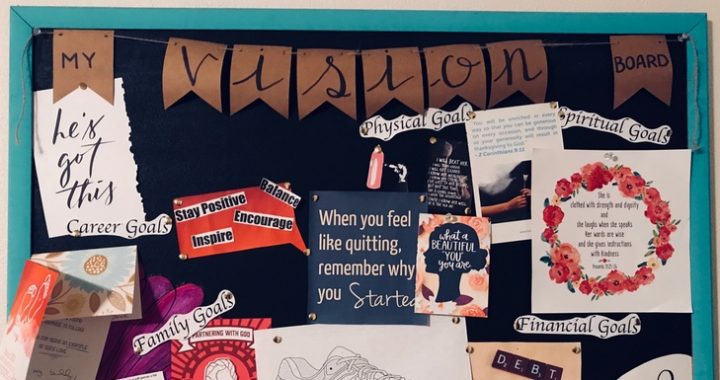
There are plenty of coaches who advocate using a vision board for our goals. This is because it makes our goals super visual and keeps us present to them throughout the week. If a vision board is too grandiose, have a pile of post-its that you can jot your goals on and stick them inside your cupboard. Then, every time you meet a goal, rip off the sticky square and toss it away in the bin.

Another helpful way to meet our goals is to have an accountability partner. Financial goals are no different – having a financial advisor who is in your court, knows how you make choices and what you want to achieve in life is highly beneficial to making your goals easier to achieve.

At the end of each day, remind yourself that you’re not alone and that tomorrow is a new day where you can keep working towards something new and awesome!

Sustainable sanity

When we stand together, we can succeed together. We can support and encourage one another. But this only happens in our smaller, more intimate groups. The fourth industrial revolution has slowly edged us into a communication environment that is overwhelmed with information.

We are learning that whilst we can stand together in powerful support, we can also suffer together. A burden indeed shared is a burden halved, but if we’re not aware of it, the cumulative stress of those around us becomes additional stress for us.

This means that whilst we’re battling our own stress, we’re also taking on the stress of our collective unconscious.

This is known as the allostatic load: “the wear and tear on the body” that accumulates as we are exposed to repeated or chronic stress. As we scroll through our social media channels late at night (instead of getting an early night…), the algorithms feed us information that shows people behaving with less tolerance, forgiveness and empathy.

It’s because this keeps us scrolling for a few seconds longer. 

Mass media, for decades, has known that bad news sells. Social media has taken it to an exponentially higher level. It’s mentally corrosive and erosive, all at the cost of public interest – purely to remain interesting to the public.

It would be lovely to simply silence the onslaught of media and messages that cling to the virtual platforms that we use to engage with our family, friends, colleagues and customers, but we’re too far into the 4IR to turn back now. We need a different strategy to regain our sanity – and sustain our sanity.

Clean your feed 

Begin by boycotting the channels that happily fill your head and mind with a worst-case view of what’s going on in the world and, in the process of doing it, make you sad or angry.

Be more proactive on your social media channels. Hide or unfollow posts that are bating or triggering you.

Choose trust over mistrust

If we can break the natural circle of societal mistrust that has grown over the last decade, we can begin to rebuild a circle of trust in its place.

This isn’t about blind trust – if someone is being a bully online, we should shut them down. It’s about retraining our brain to realise that not everyone is out to spread malignant information. If we can slow down our reactionary time and squeeze in some reflection before responding, we can improve our ability to filter the riff-raff from the genuinely benevolent.

Avoid putting a spotlight on drama

We’ve become masters at making mountains out of molehills, and we have to keep our overreactions in check! Catastrophising is an extraordinarily debilitating trait because it is a trigger for anxiety, stress and depression.

Late night (or 3am) browsing is often a recipe for terrible decisions. We’re tired and emotionally vulnerable at these times – it’s not a great state for responsible online engagement. Put boundaries in place, both on what you’re seeing and when you’re seeing it.

In her blog – How To Stay Sane In A World Of Pain – Zoë Clews offers this advice:

Know what you’re in charge of – for good mental health, it’s important to understand these three areas: 

Locum of control – what time you get up, what you choose to put into your body, whether you pay your bills on time – this is you being in charge of yourself. 

Areas of influence – these are the things we can influence, but not directly control. They might include helping someone to quit smoking or persuading a friend not to go back to a toxic ex. Once we have done what we can to influence, we have to be ready to let go regardless of the outcome.

Things we can do nothing about – this covers things like whether an asteroid is going to destroy the Earth in your lifetime. These are the situations that really aren’t worth worrying about, and it’s these things that the media revels in telling you about. In the end, your anxiety and stress just feeds your sense of powerlessness.

If you really feel you can exert enough control and influence over something to make a tangible difference, then do it – the world needs more people like you. But be circumspect enough to be able to recognise when a situation is beyond your mastery.

We reclaim our sanity with intention, intention to do better and be better. If we just go with the tide of a dangerous shoreline, we’ll be bashed about by the waves and sucked in by the undercurrents. Every choice we make is a reflection of our mental health and will either help or hinder those around us.